Our Approach
From Due Diligence to Constructive Discovery
Most diligence processes begin in the wrong place: a checklist and a quiet fear of being wrong. The underlying question becomes, “Where are the flaws, and are there enough reasons to say no.”
In that frame, missing data, stalled pilots, or half‑formed partnerships get treated as red flags instead of raw material — even when the red flags are solvable with a small adjustment, the right allies, or capital that meets the moment
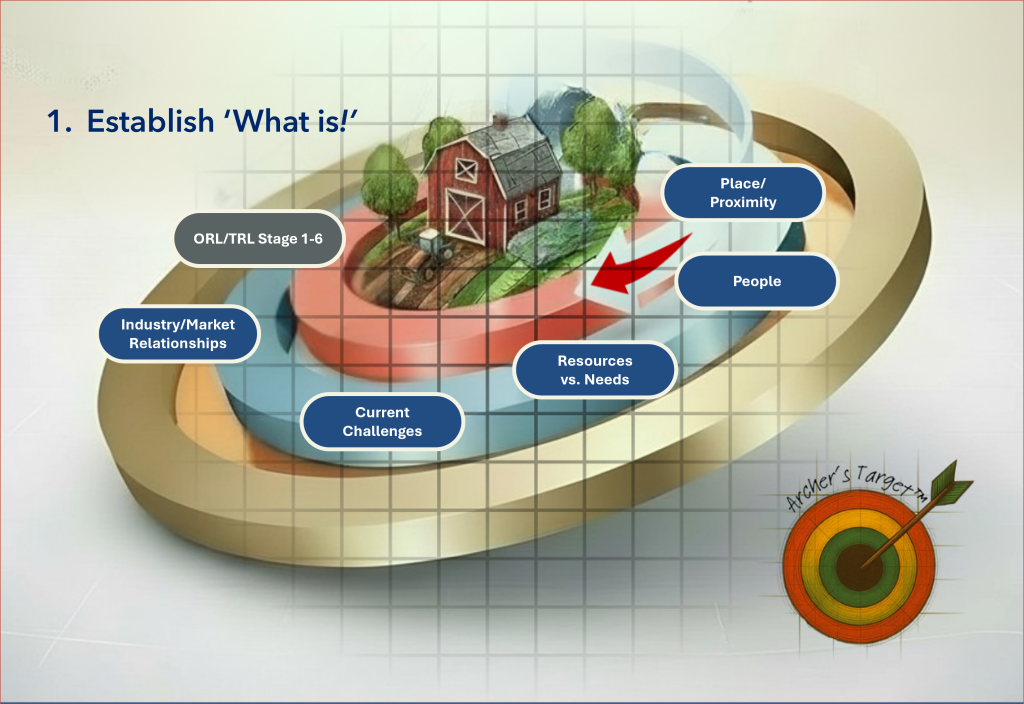
Our approach is deliberately different. We call it constructive discovery. Instead of beginning with a fixed specification, we begin with the Imaginary Discovery Grid: an outside‑in map of what is, what could be, and what is missing across the people, technologies, methods, business model, and place. Every “buried bone”—i.e., old data sets, stranded technologies, abandoned pilots, expired grants—is surfaced as a potentially useful fragment, not a liability.
On the Grid, the core questions are:
- What is really here?
- What could be built from it?
- What would have to be true to make this worth a capital journey?[
- Gaps are logged as design tasks and future capital uses, not as reasons to walk away. Once the Grid shows that a real journey exists, we shift into the Archer’s Target™ and Opportunity Ascension Pathway, where that same constructive discipline organizes the work ring‑by‑ring and stage‑by‑stage—from Meaningful to truly investable, matched to the right blend of philanthropic, concessional, impact‑aligned, and commercial capital along the way.
The graphics that follow make this visible. They show how we move from open‑ended discovery to structured advancement; from finding where the “bones are scattered” to forming coherent Enterprise bundles; from promising pilots to staged, replicable investment pathways that small farms, communities, and mission‑aligned capital can actually use. Whether the starting point is ORL‑1, an idea, an ORL‑3 stranded technology, or an ORL‑5 farm method needing lift, the process is the same: clarify reality, imagine destinations, Confirm the pathway, and then lift the opportunity, step by step, along its Readiness and capital journey.
Why this matters for capital partners
For philanthropic and concessional capital, constructive discovery turns “risk” into a Realization roadmap. Instead of screening out opportunities because pieces are missing, we name what is needed, in what order, and exactly what capital source belongs where. This makes early dollars purposeful: they don’t just fund activity, they create the conditions for the next level of readiness — ensuring promising work doesn’t falter between just being a good idea and being capital‑worthy.”
Imaginary Discovery Grid — Phase I-A
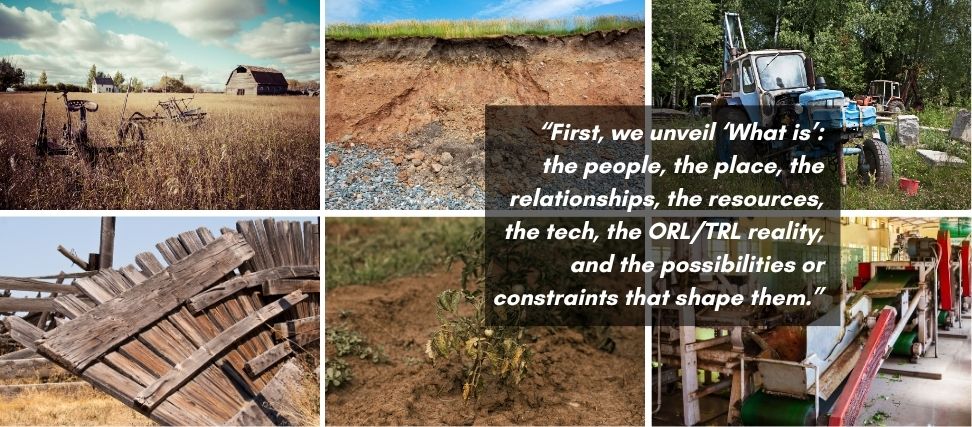
Imaginary Discovery Grid Phase I–B …Structured Curiosity!

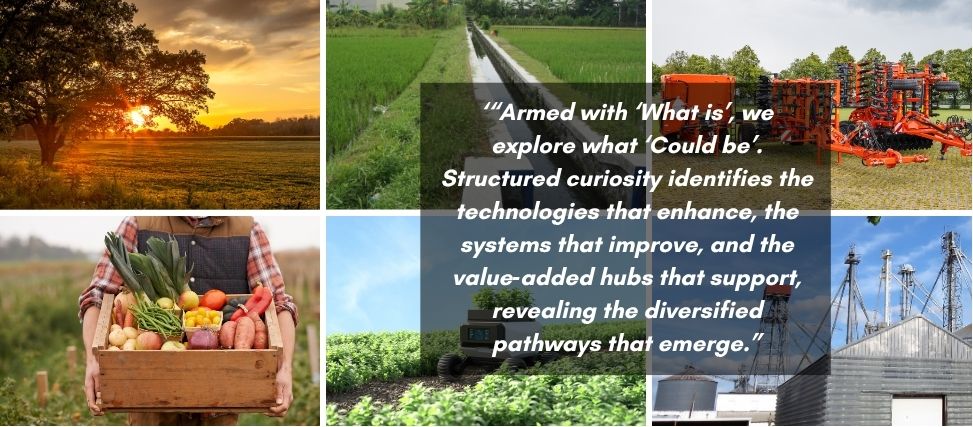
Constructive Discovery Phase II-A


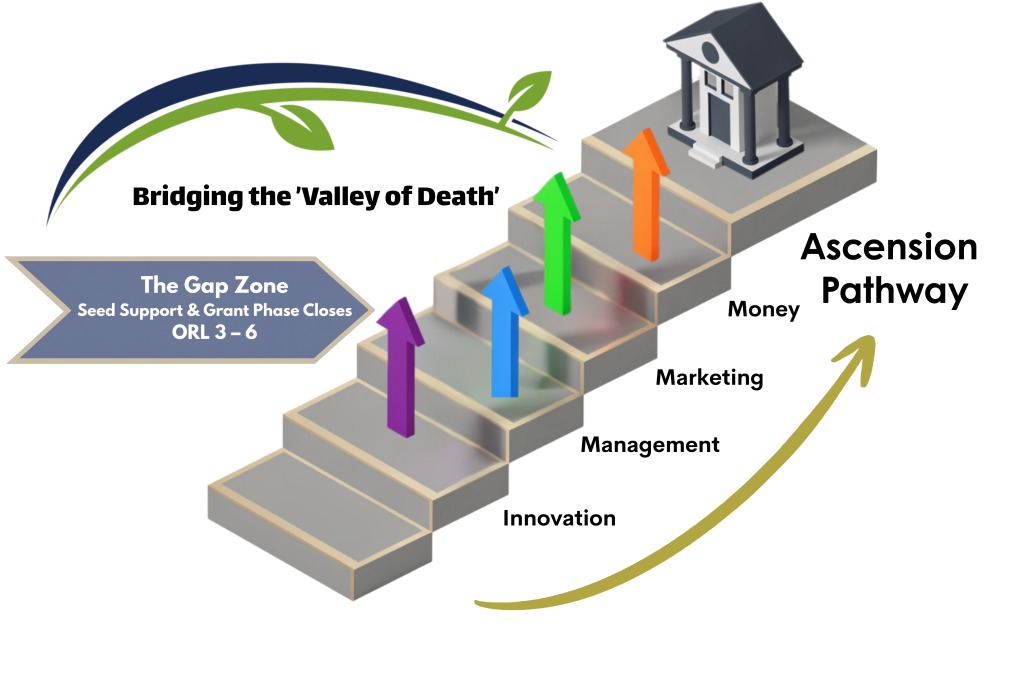
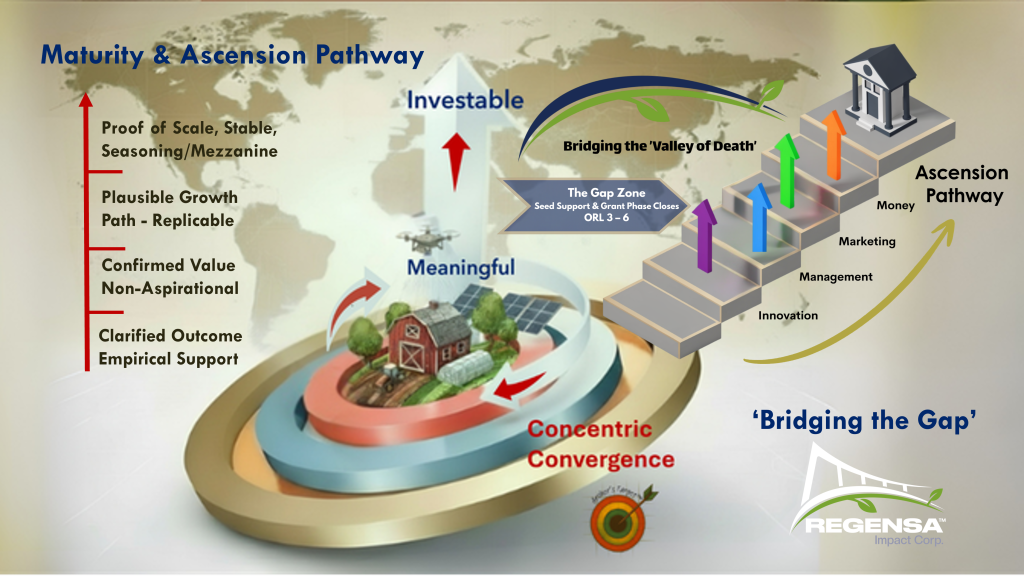
Ascension
Pathway
The Ascension Pathway sequences the work so that Supported opportunities cross the gap, from promising to Investment ready.
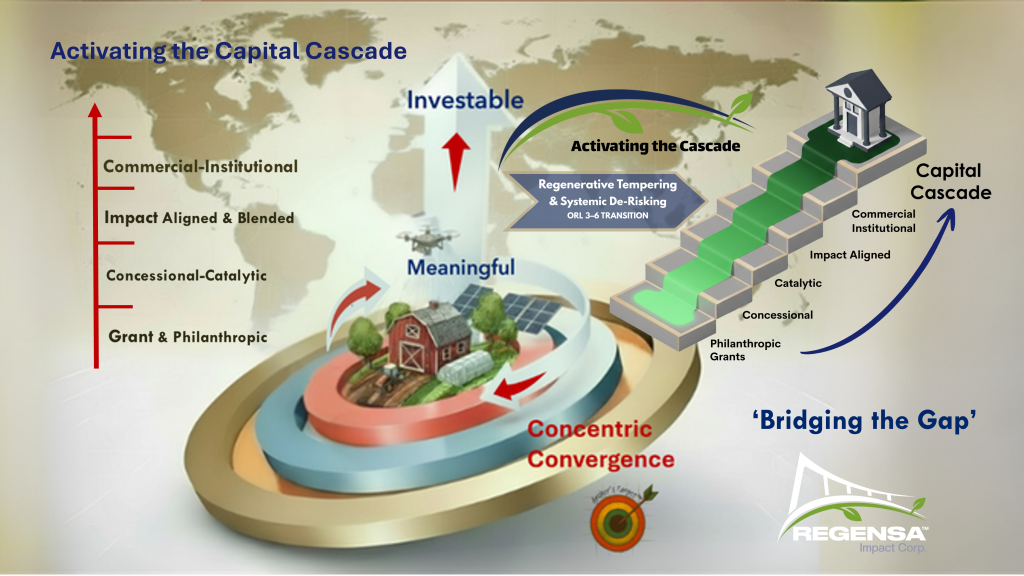
Capital
Cascade
The Capital Cascade shows where philanthropic, concessional, catalytic, impact‑aligned, or commercial capital can step in, one stage at a time, as readiness increases.